
receptivity and photography

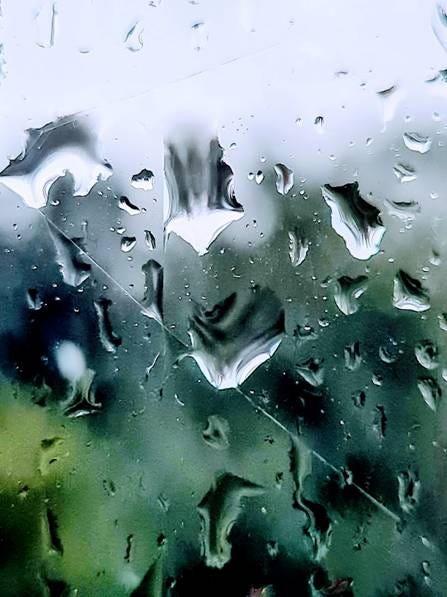
Kaja Silverman’s work has long been a gift and I look forward to Volumes Two and Three of her History of Photography. Meanwhile, I am drawn repeatedly to Volume One: The Miracle of Analogy, which focuses on early photography, notably the camera obscura and first decades of chemical photography, the period during which, as Silverman puts it, “the photographer played only a nominal role.” Or as William Henry Fox Talbot noted in 1839, “It is not the artist who makes the [photographic] picture, but the picture which makes itself.” (See Silverman, p. 10)
analogy/animals/world
Silverman’s key insight, drawn from Talbot and many other practitioners and commentators, is that photography is:
“the world’s primary way of revealing itself to us – of demonstrating that it exists, and that it will forever exceed us. Photography is also an ontological calling card: it helps us to see that each of us is a node in a vast constellation of analogies.” (Silverman,10-11)
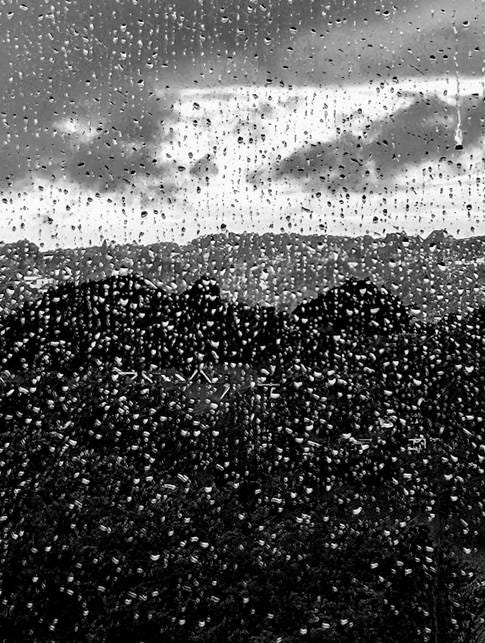
And take note of Silverman’s all-embracing definition and use of her chosen term: analogy.
“When I say ‘analogy,’ I do not mean sameness… or even a rhetorical relationship – like a metaphor or a simile – in which one term functions as the provisional placeholder for another. I am talking about the authorless similarities that structure Being, or what I will be calling ‘the world,’ and that give everything the same ontological weight.” (Silverman, 11)
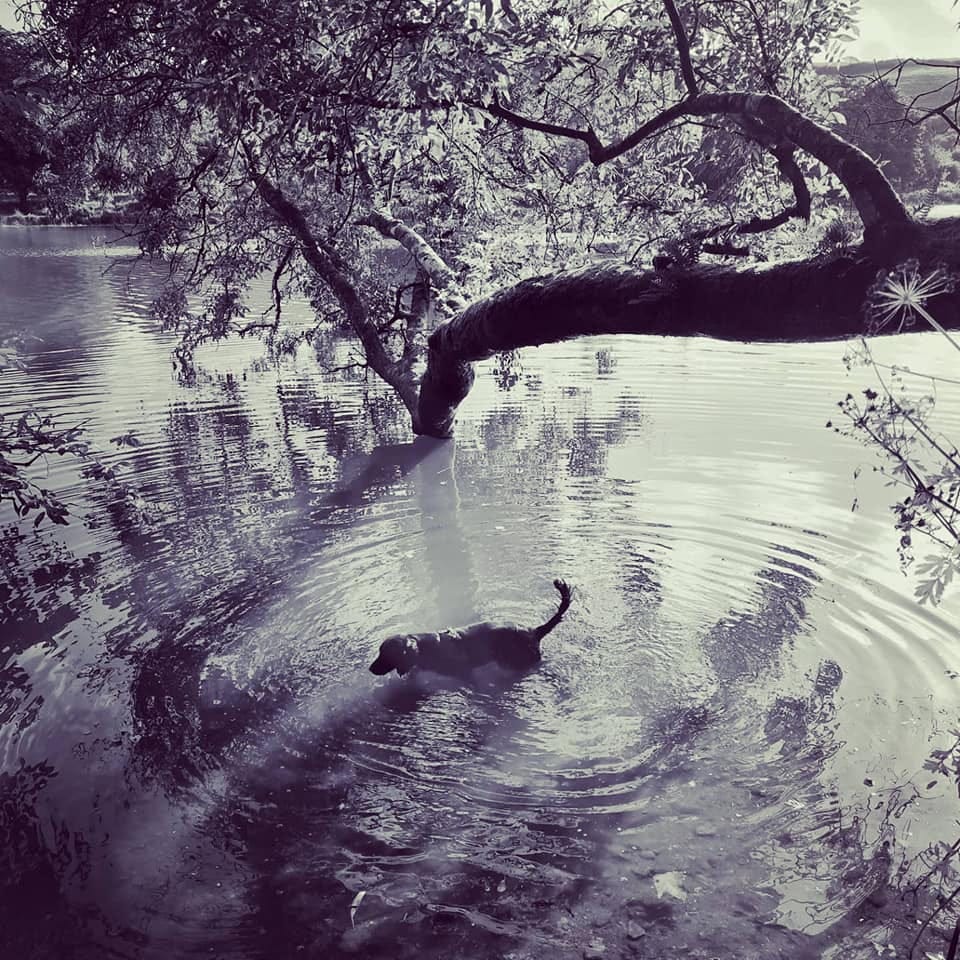
It was a magical moment, for me, to read Silverman’s empathic hopes for photography around the same time as I was reading my way into Animal Studies.[1] For surely, this is a view of photography that redeems non-human animals as part of ‘the world’ as described by Silverman. Indeed, she refers to Walt Whitman’s “vast similitude,” which “interlocks… all souls, all bodies though they be ever so different, or in different worlds / All gaseous, watery, vegetable, mineral processes, the fishes, the brutes… / All identities that have existed… / All lives and deaths…” (Whitman, Leaves of Grass & Silverman, 11)
It is, Silverman reminds us,
“only through this interlocking that we ourselves exist. Two is the smallest unit of being… Most of us are willing to acknowledge some of these similarities, but extremely reluctant to acknowledge others, particularly those that call our autonomy, agency, unity, and primacy into question. Photography is the vehicle through which these profoundly enabling but unwelcome relationships are revealed to us… It is able to disclose the world… and help us assume our place within it.” (Silverman, 11)
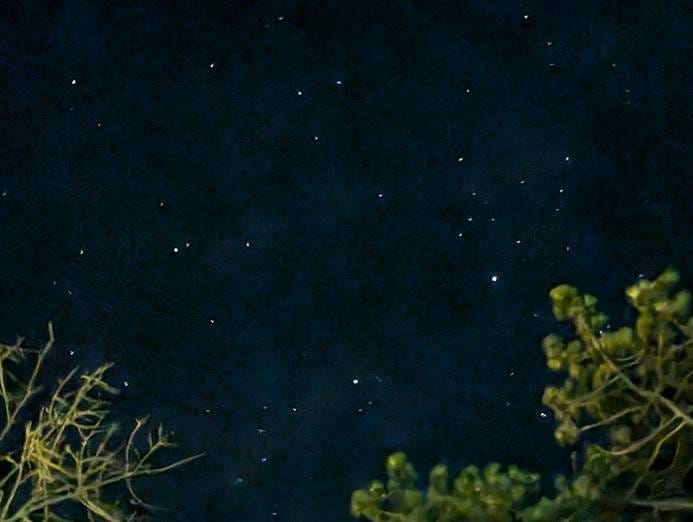
Silverman’s critical history is heady stuff for a digital-age / phone camera-carrying person, for despite my early training in pre-digital photography and a deep remembered love of all those old chemical processes, especially darkroom printing, I now use an ordinary smartphone for my pictures. Yet it was surprisingly easy to be led back to the earliest impressions of the medium. And I am tempted to argue that the use of a phone camera lends itself to Silverman’s findings more readily than we might imagine, but that is for later. For now, let’s go back.
receiving/revealing
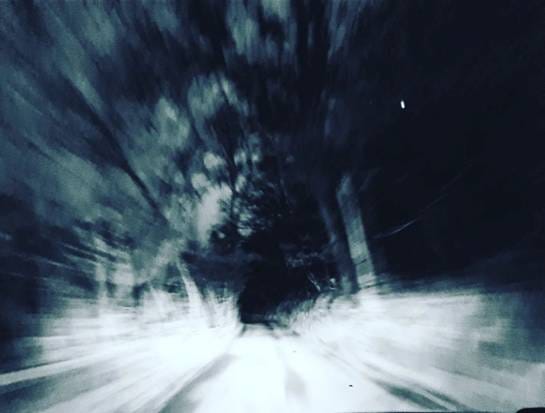
The classical camera obscura (13th-17th centuries) was a simple dark chamber. Light entered through a small aperture “bearing a reversed and inverted stream of images that both originated in the external world and analogized it.” (Silverman, 14) The viewer could only see these images at the moment they occurred, and by entering the camera obscura. In other words, the viewer was a receiver of the image.
In this pre-1700 period, discourses of receptivity - the darkened room as receiving location and the viewer as receiver - were common. Silverman’s point is that to see the images, the viewer had to be present. The viewer participated in the process as it happened. Moreover, beyond the creation of a receiving space, these were authorless images, the world revealing itself to the receiver inside the darkened room.
This would change as lenses, mirrors, and other devices were incorporated into the process. Eventually, there were desks where the receiver could make drawings of the images, thereby turning the process away from receptivity and towards representation, i.e. an opportunity to make a copy of the image. Smaller, portable equipment, wet plate and chemical photography would follow, all bringing new means to fix and reproduce, although even these images long remained unstable and impermanent.
In retrospect, the direction of travel seems evident. Discourses of authorial intervention and copying/reproducing, taking an image rather than receiving, all these would eventually dominate the practices and lexicon of photography. Yet Silverman notes that the idea of receiving persisted well into the 19th century:
“Daguerre uses it when talking about the part played by the camera obscura in the production of his photographs, and Edgar Allan Poe suggests that it is the defining attribute of the daguerreotype. Although the photographic plate ‘does not at first appear to have received a definite impression,’ he wrote in 1840, it later assumes a ‘miraculous beauty.’… Oliver Wendell Holmes titled an 1863 essay about the medium ‘Doings of the Sunbeam.’” (Silverman, 26)
In 1845, Talbot gave us the first book to be illustrated by photographs, giving a title that celebrated not so much photography as the world received via photography: The Pencil of Nature. Like Holmes, Lady Eastlake noted the role of light – the “solar pencil” - in the production of images, while Daguerre referred to the daguerreotype as “the imprint of nature.” (Silverman, 26)
Moreover, anyone who has known the mysteries and pleasures of darkroom printing will recognize Talbot’s enchantment at the emergence of a latent image on a sheet of sensitized paper:
“One day last September, I had been trying pieces of sensitized paper… in the camera obscura, allowing them to remain there for only a short time… One of these papers was taken out and examined by candlelight. There was little or nothing to be seen upon it, and I left it lying on a table in a dark room. Returning sometime after, I took up the paper and was very much surprised to see upon it a distinct picture… the only conclusion that could be drawn was that the picture unexpectedly developed itself by a spontaneous action.” (Silverman, 52)
In conjunction with such accounts, even as photography moved away from ideas of receptivity and towards those of representation/copy, thereby bestowing greater power to the photographer as author/scientist/inventor/artist/documentarian, numerous practitioners continued to note that the photograph regularly “revealed things they could not see.” Sometimes, this had to do with details that remained invisible or unnoticed until photographed. Sometimes, it was a more intangible sense of the world retaining its own powers to withhold or reveal, its power of disclosure, if you like. The photograph as self-portrait of the scene photographed:
“An anonymous reviewer wrote that ‘all nature, animate and inanimate, shall henceforth be its own painter…’ He also suggested that photography is the world’s way of revealing itself to us, and of showing us how it wants to be seen – i.e. awakening us from our Cartesian dream and reasserting its primacy…[Nature] will ‘show itself to the world without your help. It will make its wants visible and known on paper.’” (Silverman, 29-30)
I add here that although many of these early commentaries – for understandable reasons - reference a photography of ‘nature,’ none of the insights preclude scenes of towns and cities. We have only to look at Eugene Atget’s photographs of Paris to extend ideas of receiving and revealing. And beyond the tradition of street photography, interiors of houses and shops, rooms, doors, windows, mirrors, reflections, shadows, still life scenes, objects, and of course, the faces of beings, human and non-human – all these can come to us as ‘self’ disclosures or self-portraits if we open ourselves to the idea of photography as a medium of receptivity.
taking
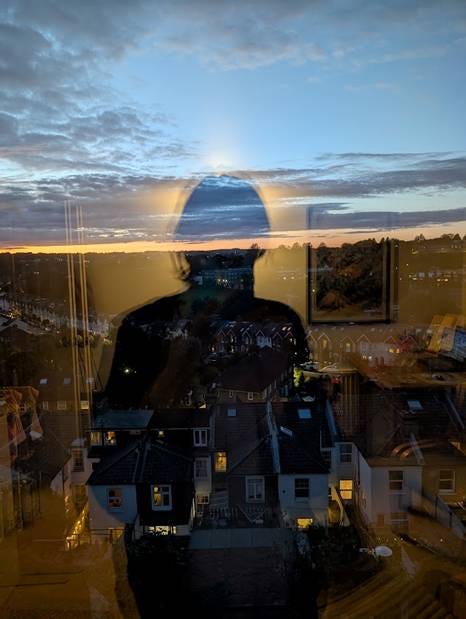
Of course, we all grew up in what I might call the post-receptivity period of photography. The early ideas described by Silverman were diminished by Enlightenment dreams of subjectivity and authorship. Cartesian confidence would be destabilized by postmodern shifts and, in other ways, by the advent of digital photography, but it has mostly survived these changes. We, the ‘post-receptivists’, continue to exercise (and believe in) our power over image-making. We say that we ‘take’ pictures rather than ‘receive’ them. And only occasionally do we pause to question the larger lexicon that came to attach itself to photography:
“‘Woolgathering Freudians’ may worry about ‘the allusions to firearms and warfare that permeate the terminology of photography,’ as Todd Gustavson remarks in his history of the camera, but the rest of us happily ‘load’ our camera, ‘aim’ at what we want to ‘capture,’ and ‘shoot.’” (See Silverman, 70)
I came, I saw, I took the picture, I conquered, I can go now, I know, we seem to say to ourselves. Yet Silverman reminds us that it was not until the 1880s that “the verb ‘to take’ decisively replaced the verb ‘to receive.’” (Silverman, 70) What if we brought it back?
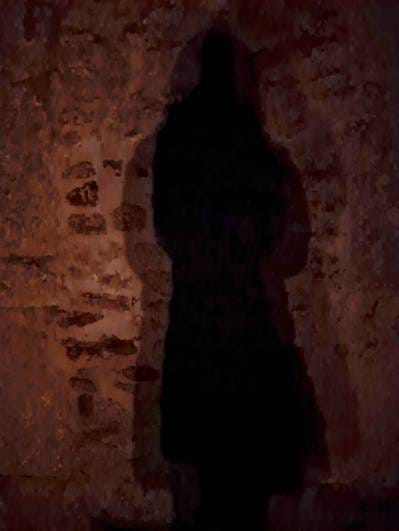
It is true that even before reading Silverman, I had to gaze upon the last remnants of my once-was, occasionally-still-am identity as a photographer, albeit one wandering these days with only a cheap phone camera in hand. All I can say for now is that I feel different when I raise my little phone to a scene now.
I am tempted to argue, too, that the phone camera suits Silverman’s findings better than we might at first imagine. First, it is a minimal agent between me/my eye and the world. Light to carry, it’s a small and unobtrusive multitasker, liable to ring at any moment and assume its other roles. More importantly, it is humbling. By diminishing the identity of ‘I am a photographer,’ it allows me to let go of a host of technical and aesthetic aspirations. I am freed of these, and this, in turn, frees the scenes before my camera. I can seek the world, hope for as much as it will show me, but hope for its continued mystery too. I might sense its textures and smells and hear its voices when, later, I look at the pictures in my phone. For I believe that all the senses permeate photographs if we let them.
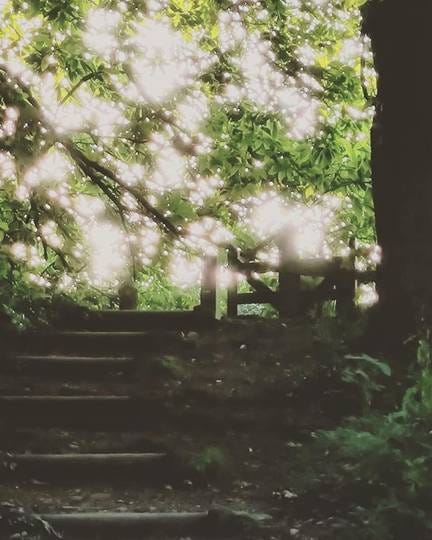
I long to quiet myself. I long to honor the places and beings that are lost or yet to come. Alone or in company, I walk in the country and town. Later, I look at the imperfect images in my phone, and I am moved by the shapes, the detail, and the surprises disclosed there. How little I see while out walking! How little I know! How hopeful this realization of ‘not seeing’ and ‘not knowing’ - because it brings us closer to all that is not us. And we humans are long overdue for that movement.
To be continued in at least two coming posts: Shedding: photography and reciprocity and Double Vision and the Stereograph.
[1] See for example, Dominick LaCapra, Understanding Others: Peoples, Animals, Pasts (2018); Jacques Derrida, The Animal That Therefore I Am (1997); Donna Haraway, The Companion Species Manifesto: Dogs, People, and Significant Otherness (2003). And for a wide-ranging essay collection on the subject, see Lynn Turner, Undine Sellback, and Ron Broglio eds. The Edinburgh Companion to Animal Studies (2019).